Why Are More Factories Switching to Sealed Bearings Instead of Open Bearings in 2026?
In 2026, Maintenance Is Becoming More Expensive Than Machinery
A decade ago, purchasing managers usually compared bearings using three simple questions:
- How much does it cost?
- How long does it last?
- Is it available?
Today, those questions are still important—but they are no longer enough.
Factories across the world are facing a completely different challenge. Skilled maintenance technicians are harder to recruit. Production schedules are tighter than ever. Warehouses are becoming increasingly automated, and unexpected downtime can ripple through an entire supply chain in hours rather than days.
In this environment, many manufacturers are taking a fresh look at a component that often goes unnoticed: the humble bearing.
One noticeable trend in 2026 is that more factories—especially in automated, logistics, food-processing, and light manufacturing sectors—are choosing sealed bearings where they make technical and economic sense, replacing open bearings in applications that once relied on regular lubrication.
The reason isn't simply that sealed bearings are "better."
It's because modern factories are changing.
The Factory of 2026 Doesn't Look Like the Factory of 2016
Walk into a modern manufacturing facility today, and you'll notice something different.
There are fewer workers standing beside machines.
Instead, you'll see:
- Autonomous mobile robots (AMRs) transporting materials.
- AI-assisted predictive maintenance dashboards.
- Vision systems inspecting products automatically.
- Collaborative robots working alongside operators.
- Sensors continuously collecting equipment data.
These technologies have one thing in common:
They work best when equipment requires as little human intervention as possible.
That shift naturally favors components designed to operate reliably with minimal maintenance—including sealed bearings in suitable applications.
Why Open Bearings Dominated for So Long
Open bearings have served industry well for decades.
Their strengths are clear:
- Easier relubrication
- Better heat dissipation
- Flexible lubricant selection
- Excellent performance in high-speed or heavy-load environments
In industries like steel, mining, cement, and certain machine tools, open bearings remain the preferred choice because maintenance schedules are already established and operating conditions demand customized lubrication.
So why are some factories changing?
Not because open bearings have become obsolete.
Because the operating environment has changed.
Labor Shortages Are Changing Maintenance Strategies
One of the biggest industrial stories of 2026 isn't a new machine.
It's a shortage of experienced maintenance personnel.
Many manufacturers report increasing difficulty recruiting skilled technicians capable of performing precision lubrication, bearing inspection, and preventive maintenance.
When fewer technicians are responsible for more equipment, every maintenance task matters.
A sealed bearing eliminates several routine steps:
- No daily grease checks
- Less contamination during lubrication
- Reduced risk of incorrect grease selection
- Fewer scheduled maintenance stops
That doesn't eliminate maintenance entirely, but it can significantly reduce the workload for appropriate applications.
Contamination Is Still the Number One Bearing Killer
Many people assume bearings fail because of excessive loads.
In reality, contamination remains one of the most common causes of premature bearing failure.
Tiny particles can enter an open bearing during:
- Dusty production
- Packaging operations
- Food processing
- Woodworking
- Agricultural equipment
- Logistics warehouses
Even microscopic contaminants can damage raceways over time.
A quality sealing system acts as the first line of defense, helping prevent dust, moisture, and debris from entering the bearing.
In clean-to-moderately contaminated environments, this protection can substantially extend service life.
Automation Has Changed the Cost Equation
In the past, stopping a conveyor for ten minutes to lubricate bearings wasn't a major issue.
Today, it can interrupt an automated production line where every process is synchronized.
One bearing requiring unexpected maintenance may temporarily affect:
- Robots
- Conveyor systems
- Sorting equipment
- Automated storage systems
- Packaging lines
The cost isn't the bearing.
It's the interruption.
As manufacturers increasingly evaluate equipment using Total Cost of Ownership (TCO) instead of purchase price alone, reducing maintenance events has become a strategic objective.
Food and Pharmaceutical Industries Love Clean Designs
Hygiene standards continue to rise.
Food manufacturers and pharmaceutical plants cannot afford grease leakage around sensitive production areas.
Modern sealed bearings help reduce the possibility of lubricant escaping into the surrounding environment while also limiting external contamination from entering the bearing.
Combined with stainless-steel housings and food-grade lubricants where required, sealed bearings fit naturally into hygienic equipment design.
Warehouses Never Sleep Anymore
E-commerce continues to reshape logistics in 2026.
Many distribution centers now operate almost around the clock.
Conveyors, sorting systems, pallet wrappers, and automated storage systems run for extended hours with minimal downtime.
Maintenance windows are becoming shorter.
Equipment designers increasingly prefer components that can operate for long periods without routine relubrication.
In these situations, sealed bearings often provide operational advantages.
Sustainability Isn't Just About Energy
Factories today aren't only trying to reduce electricity consumption.
They're also trying to reduce:
- Grease usage
- Waste lubricant disposal
- Maintenance travel
- Spare-part consumption
- Unexpected replacements
Every avoided maintenance visit saves labor, transportation, and consumables.
When multiplied across hundreds or thousands of bearings, those savings become meaningful.
This broader definition of sustainability is influencing purchasing decisions worldwide.
Modern Seals Have Improved Dramatically
Some engineers still remember sealed bearings from twenty years ago.
Those products often created higher friction and generated more heat.
Seal technology has advanced considerably.
Modern designs balance:
- Low friction
- Effective contamination protection
- Improved lubricant retention
- Longer service intervals
While no seal is perfect for every application, today's options are significantly more sophisticated than earlier generations.
When Open Bearings Still Make More Sense
Despite the growing popularity of sealed bearings, open bearings remain essential in many industries.
Applications that often continue to favor open bearings include:
- High-speed machine tools
- Heavy mining equipment
- Steel mills
- Large electric motors with centralized lubrication
- Extremely high-temperature environments
- Applications requiring frequent lubricant replacement
These systems benefit from regular lubrication and close monitoring.
Choosing sealed bearings simply because they require less maintenance could actually reduce performance in such cases.
The right choice always depends on operating conditions—not trends.
How Smart Buyers Compare Bearings in 2026
Instead of asking only:
"Which bearing is cheaper?"
Leading manufacturers ask:
- How many maintenance hours will this save?
- How much downtime could it prevent?
- What is the contamination risk?
- Does this application really require relubrication?
- How long is the expected service interval?
- What are the environmental conditions?
These questions focus on long-term operating value rather than initial purchase price.
A Hybrid Strategy Is Becoming More Common
Interestingly, many factories aren't replacing every open bearing.
Instead, they're adopting a hybrid approach.
For example:
- Sealed bearings on conveyors
- Sealed bearings in warehouse automation
- Sealed bearings on packaging equipment
- Open bearings in heavy presses
- Open bearings in high-temperature machinery
- Open bearings where centralized lubrication already exists
This allows manufacturers to optimize maintenance without compromising performance.
It's not about choosing one type over the other.
It's about selecting the right bearing for each application.
Looking Ahead: Bearings Are Becoming Part of the Smart Factory
As Industry 4.0 continues to evolve, bearings are no longer viewed as simple mechanical components.
They are part of a broader strategy involving:
- Predictive maintenance
- Equipment reliability
- Lifecycle cost management
- Sustainability goals
- Digital asset management
Manufacturers increasingly expect every component—including bearings—to contribute to higher uptime and lower operating costs.
Sealed bearings fit naturally into many of these objectives, particularly where reducing manual intervention is a priority.
Final Thoughts
The growing interest in sealed bearings during 2026 doesn't mean open bearings are disappearing. Instead, it reflects a broader transformation in manufacturing.
Factories are becoming more automated, maintenance resources are under pressure, and companies are paying closer attention to total operating costs rather than simply comparing purchase prices.
For applications where contamination control, reduced maintenance, and long service intervals are priorities, sealed bearings are becoming an increasingly attractive solution.
At the same time, open bearings continue to deliver outstanding performance in demanding environments where customized lubrication, high speeds, or extreme operating conditions are involved.
The most successful manufacturers are not asking, "Which type of bearing is best?" They are asking a more practical question:
"Which bearing is best for this specific application?"
 Warehouse Robots Never Sleep—Can Their Bearings Keep Up?
 How Bearing Downtime Can Cost Offshore Platforms Millions
 Hybrid Bearings vs Steel Bearings: Which One Wins in 2026?
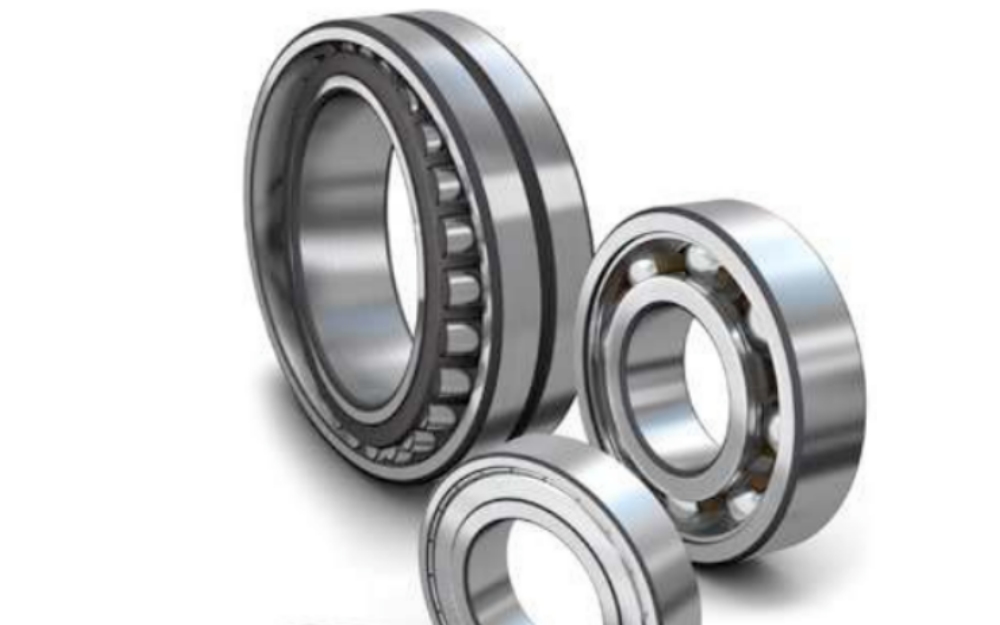 Why Are More Factories Switching to Sealed Bearings Instead of Open Bearings in 2026?