
About Us
Why are high-end equipment manufacturers starting to redefine bearings?
Views : 477
Update time : 2026-03-31 13:12:01
From "Usable" to "Ultimate Stability": An Underestimated Industrial Upgrade is Underway
In many people's minds, bearings have always been a "low-key, almost overlooked" industrial component.
They don't emit light, aren't connected to the internet, aren't intelligent, and seem to lack any "disruptive innovation."
But if you've recently followed the fields of new energy, robotics, semiconductors, or high-end manufacturing, you'll notice a subtle change:
The more advanced the equipment, the more "demanding" the requirements for bearings become.
Behind this, it's not that bearings have changed, but rather that the entire industrial world is redefining "what constitutes a qualified bearing."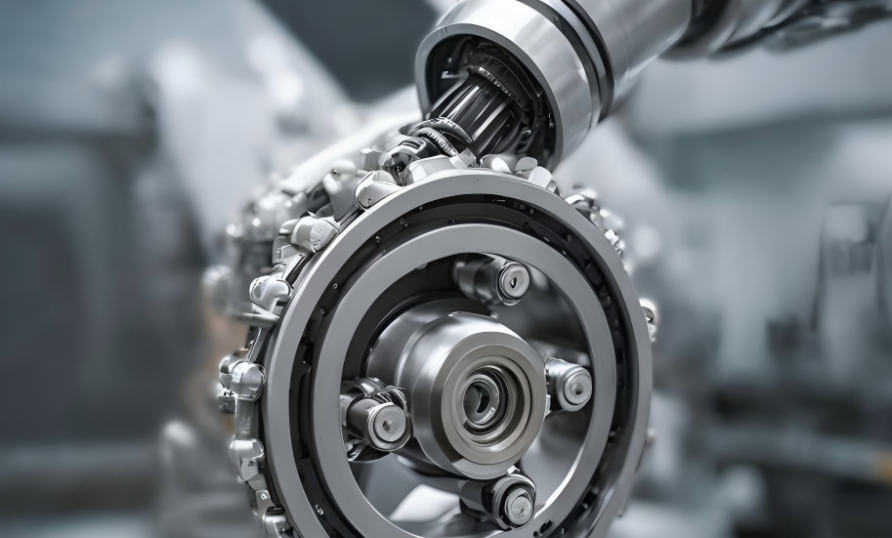
I. The Past Bearing Logic: As Long as It Turns, That's Enough
In the traditional industrial era, the requirements for bearings in most equipment were actually quite simple:
-Able to bear loads
-Able to operate continuously
-Not prone to frequent failures
In other words, the core task of bearings was: "To get the machine moving."
Under this logic, companies focused more on:
-Whether the price was reasonable
-Whether the service life met
-Whether it was easy to replace
Therefore, many bearing procurement strategies were essentially "cost-first."
As long as the equipment is still operational, minor performance differences will not be magnified.
II. Why are today's high-end equipment starting to "dissatisfy"?
With industrial upgrading, some industries are undergoing fundamental changes, which directly "force" bearings to upgrade.
1. Precision requirements are being magnified infinitely.
In fields such as semiconductor equipment, precision machine tools, and medical equipment, errors have moved from the "millimeter level" to the "micrometer or even nanometer level."
In this environment:
-Small vibrations in the bearing
-Slight unevenness in the raceway
-Slight changes in lubrication
will all be magnified into:
-Decreased product yield
-Accumulated processing errors
-Fluctuations in equipment stability
At this point, the bearing is no longer just a "support component," but an integral part of precision control.
2. Increasing Speeds, Decreasing Fault Tolerance
Take high-speed motors and electric vehicle drive systems as examples:
-Higher speeds
-More concentrated heat
-More sensitive to frictional losses
Traditional bearings are prone to:
-Excessive temperature rise
-Lubrication failure
-Increased noise
In high-end equipment, these problems mean:
-Increased energy consumption
-Decreased efficiency
-Even system-level failures
Therefore, bearings are now required to have:
-Lower coefficient of friction
-Better thermal stability
-Higher dynamic balancing capabilities
3. Equipment is becoming "24/7 shut-down"
In automated warehousing and smart manufacturing production lines, a reality is unfolding:
Downtime costs far exceed repair costs
A one-hour downtime on a production line can lead to:
-Order delays
-Waste of labor costs
-Chain effects on other equipment
In this context, companies are focusing on:
-MTBF (Mean Time Between Failures)
-Predictive maintenance capabilities
-Overall reliability
And bearings are precisely one of the most critical "failure trigger points."
So the problem becomes:
Not "replace it when it breaks," but "prevent it from breaking in the first place."
4. Increasingly "Extreme" Operating Environments
Emerging industries are pushing bearings into more complex environments:
-Wind Power: High humidity, high salt spray, long-cycle operation
-New Energy Vehicles: High temperature + high speed + frequent start-stop
-Food and Pharmaceuticals: Cleanliness and pollution-free requirements
-Robots: Frequent start-stop + high-precision repetitive positioning
These environments place entirely new demands on bearings:
-Corrosion resistance
-Sealing performance
-Lubrication compatibility
-Material stability
In other words:
Bearings are beginning to transform from "standard parts" into "scenario-specific products."
III. Four Directions in Which Bearings are Being Redefined
Driven by these demands, the definition of bearings in high-end equipment is undergoing significant changes.
1. From "General-Purpose Parts" to "Customized Core Components"
In the past: Bearings were standardized products; matching the model was sufficient.
Now: More and more companies are starting to:
-Customize sizes
-Adjust clearance
-Optimize materials
-Design custom lubrication solutions
Bearings are no longer just "buy and use," but "participate in the design."
2. From "Mechanical Component" to "Part of System Performance"
In the past, bearings were merely a part of a mechanical structure.
Now, they directly affect:
-Energy consumption
-Precision
-Noise
-Overall machine lifespan
For example:
-A low-friction bearing can directly reduce overall machine energy consumption by 5%-10%
-A set of high-precision bearings can significantly improve machining yield
3. From "Passive Replacement" to "Active Monitoring"
With the development of intelligent manufacturing, more and more equipment is introducing:
-Vibration monitoring
-Temperature monitoring
-Operating data analysis
Bearings are gradually becoming "sensible" components.
The future trend is:
Bearings will not only be used, but also "managed."
4. From "Price-Driven" to "Lifecycle Cost-Driven"
Many companies have begun to realize that:
Cheap bearings may be the most expensive choice
Because they may lead to:
-More frequent downtime
-Higher maintenance costs
-Greater hidden losses
Therefore, the procurement logic is changing:
-Not just looking at the unit price
-Focusing more on long-term stability
-Paying more attention to overall ROI
IV. An overlooked reality: Bearings are becoming a "competitive differentiator"
In the past, bearings were rarely considered a competitive advantage.
But now, in high-end manufacturing:
-Whoever can operate more stably is more competitive
-Whoever can reduce downtime is more profitable
And bearings are precisely one of the key factors influencing these outcomes.
Many companies are already doing the following:
-Optimizing bearing selection
-Upgrading lubrication solutions
-Introducing higher-grade products
-Establishing preventative maintenance mechanisms
These seemingly "detailed" adjustments often lead to:
-A significant improvement in overall efficiency
-Long-term optimization of cost structure
V. In conclusion: Bearings haven't changed, but the standards have
If we were to summarize today's changes in one sentence, it would be:
The bearings themselves haven't undergone a revolution, but the industry's requirements for them have.
-From "usable" to "easy to use,"
-From "easy to use" to "stable,"
-And now to "ultimate reliability."
This is not just an upgrade of bearings, but a reflection of the maturity of the entire industrial system.
In the future, with:
-The continued development of new energy sources
-The in-depth advancement of intelligent manufacturing
-The continuous upgrading of high-end equipment
The role of bearings will only become more and more important.
It may still be inconspicuous, but it is quietly determining one thing:
Whether a piece of equipment is merely "operable" or "reliable."
FAQ
Q1: Why do high-end equipment rely more on high-quality bearings?
Because high-end equipment has higher requirements for precision, stability, and continuous operation, and bearings directly affect equipment performance and lifespan.
Q2: What are the main differences between ordinary bearings and high-end bearings?
The main differences lie in materials, machining precision, lubrication methods, and lifespan stability.
Q3: How should companies choose bearings suitable for high-end equipment?
A comprehensive consideration should be given to operating conditions, load, speed, environment, and long-term maintenance costs, rather than just looking at the price.
相关新闻
 Warehouse Robots Never Sleep—Can Their Bearings Keep Up?
Jul 20,2026
Warehouse Robots Never Sleep—Can Their Bearings Keep Up?
 How Bearing Downtime Can Cost Offshore Platforms Millions
Jul 16,2026
How Bearing Downtime Can Cost Offshore Platforms Millions
 Hybrid Bearings vs Steel Bearings: Which One Wins in 2026?
Jul 14,2026
Hybrid Bearings vs Steel Bearings: Which One Wins in 2026?
 Why Are More Factories Switching to Sealed Bearings Instead of Open Bearings in 2026?
Jul 07,2026
Why Are More Factories Switching to Sealed Bearings Instead of Open Bearings in 2026?